Prevention Starts HERE
Prevention education equips young people with the knowledge and tools to make informed decisions that safeguard their well-being and strengthen their families and communities. Addressing the risks of substance use and other high-risk behaviors early empowers youth to overcome challenges, build resilience, and shape brighter futures. This proactive approach highlights the ripple effect of their choices, inspiring healthier and more supportive communities for all.
Youth need to access prevention education through their family, school, healthcare communities, media, faith community, SU Prevention Organizations, law enforcement, and peer-to-peer support. All community sectors must create awareness and offer education on preventing substance use so young people can make informed decisions.
Community Coalition work is guided by evidence-based frameworks such as the Seven Strategies for Community Change developed by the Community Anti-Drug Coalitions of America (CADCA) and the Strategic Prevention Framework developed by the Substance Abuse and Mental Health Services Administration (SAMHSA) and includes activities like:
Change or initiate community-wide policies
School-based substance use prevention work focuses on developing and implementing policies and practices that support student health and educate them about the dangers of substance use.
Designing communication campaigns to modify social norms
Hosting events that bring awareness and education to prevent substance use in youth
Identifying opportunities for youth to engage in community change
Offering youth and parent education and training
If it's predictable, it's preventable! Substance use, misuse, abuse, and disorders CAN be prevented.
How? Education and awareness with a broad range of programs positively alter the balance between risk and protective factors for drug use in families, schools, and communities (National Institute on Drug Abuse, NIH).
It takes educating ourselves, our families, our friends, and our communities to understand and support the facts that can and will change the social norms that today support "all teens experiment; it's a right-of-passage, and they will grow out of it." This social norm is NOT the truth, and it's time that our communities get the information necessary to support our youth in substance use prevention.
Preventing substance use concerns in children, adolescents, and young adults is critical to Americans’ behavioral and physical health. If communities and families can intervene early, behavioral health disorders might be prevented or symptoms mitigated - early use of drugs increases a person's chances of having a substance use disorder. Remember, drugs change the brain, and this can lead to addiction and other serious problems. So, preventing the early use of drugs or alcohol may go a long way in reducing these risks (NIH).
Upcoming Events




We believe prevention is the cure, but until prevention education and awareness become commonplace, prevention must include knowing where to seek support. That is why our work helped launch first-of-its-kind initiatives in Oregon: a Recovery High School. With legislation, Oregon will open more high schools that support youth recovery.
Harmony Academy, Oregon’s first recovery high school, and now Rivercrest Academy, join in supporting youth in meeting their academic and personal goals toward post-secondary careers and learning.
We also support organizations like 4D Recovery, which now has Adolescent Services. 4D Youth’s mission is to empower adolescents aged 14-17 with substance use disorder to find freedom from drugs and alcohol. We offer peer-based recovery services, abstinence-based social support, family support, and collaborative services! Located in the heart of East Portland, the 4D Youth Center is well-positioned to support youth across the tri-county area.
Our main work and focus is to support initiatives focused on prevention education, awareness, and resources like the ones below:
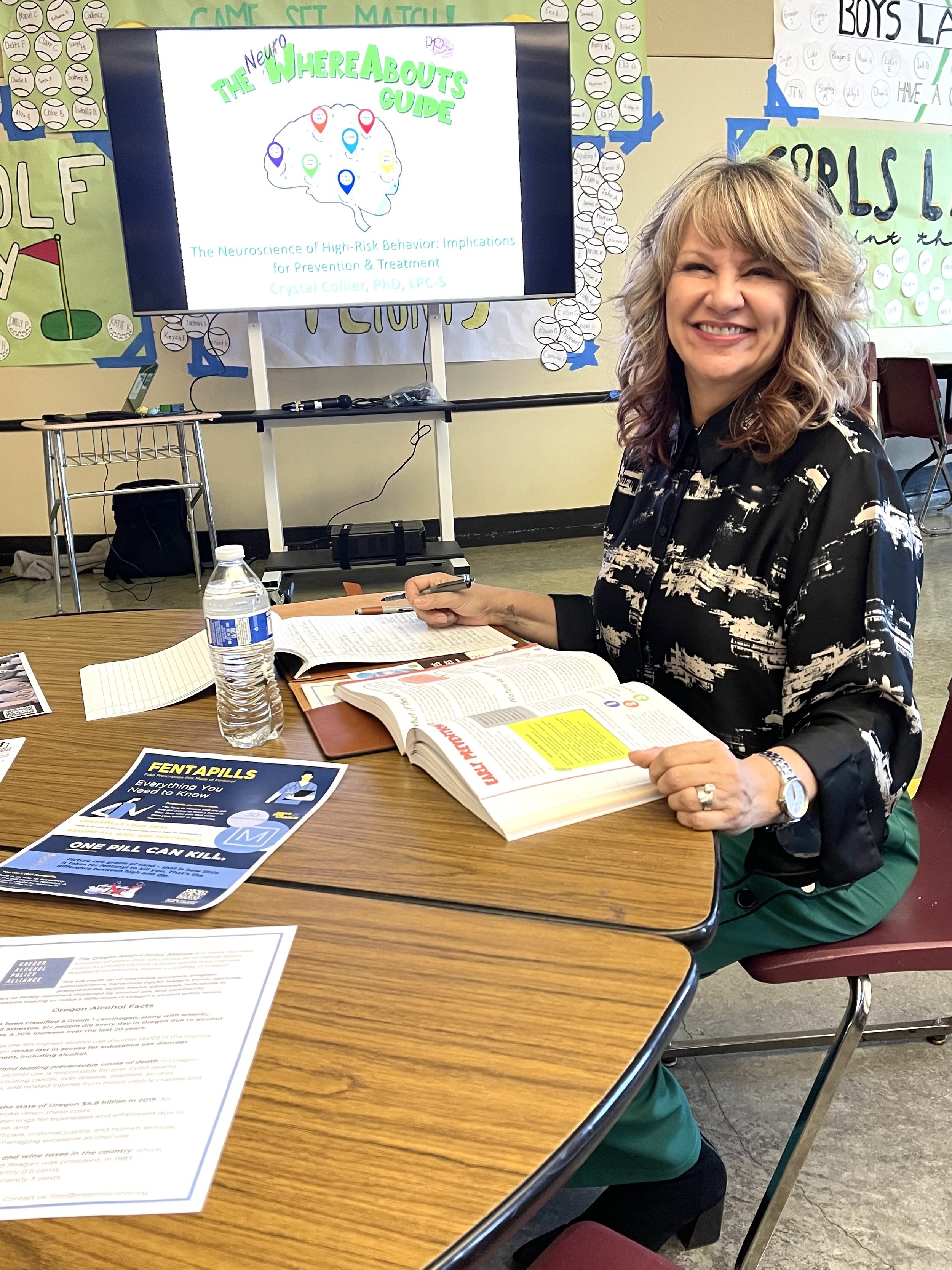
Know Your Neuro Prevention Program
Know Your Neuro puts brain-based, social-emotional, and prevention skills training right in the hands of schools and caregivers. Designed to be integrated into a school's health or homeroom curriculum, Know Your Neuro videos and class activities can be easily incorporated and tailored to the developmental needs of K-12 youth.
The Neuro WhereAbouts Guide: In the guide, Dr. Collier shows what healthy brain development looks like, how risky behaviors can derail that trajectory, and how to keep development on track. The NeuroWhereAbouts Guide puts at parents’ fingertips the developmentally appropriate prevention science they need to set children up for success from elementary school to college.
Children's Books: Parents, caregivers, teachers, and kids will have fun and connect while learning what the brain does and how to keep it strong by growing skills. Each book is developmentally appropriate for children aged 4 to 11 in grades K-2 or G3-5.
Prevention works if done consistently!
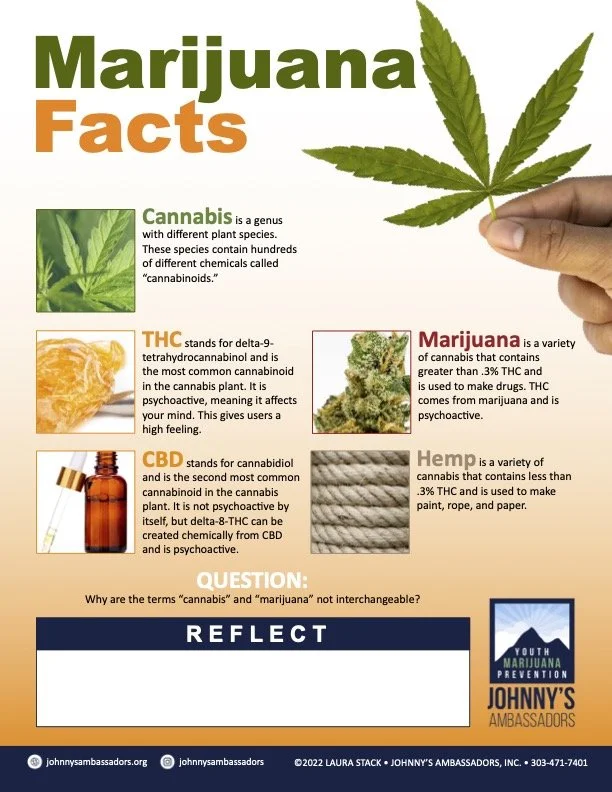
Johnny’s Ambassadors, Saving Our Youth from the Harms of THC
Johnny’s Ambassadors is on a mission to educate teens, parents, and communities about the dangers of today’s potent THC products (marijuana, dabs, vapes, edibles) on adolescent brain development, psychosis, and suicide. We focus on youth awareness, prevention, and education regarding THC. We share data-driven facts and clear messaging with teens and parents to reduce the likelihood they will use marijuana and stop progression to more problematic use. Visit the learning library of educational resources, research, news, and more.
High-Concentration Delta-9-Tetrahydrocannabinol Cannabis Products and Mental Health Outcomes: A Systematic Review – Aug. 2025. High-concentration THC products are associated with unfavorable mental health outcomes, particularly for psychosis or schizophrenia and CUD. Products containing at least 5 mg or 10% delta-9-tetrahydrocannabinol were associated with a 70% increased risk of psychosis or schizophrenia and a 75% increased risk of cannabis use disorder.

Real Talk about Fake Pills Made for Oregon
Illicit Fentanyl is dominating the drug landscape and causing record drug deaths in America, particularly among our Gen Z youth. Learn the facts about fentanyl and take empowered action to protect yourself and your loved ones. Get INFORMED
Click here to learn more about facts and data, get classroom materials, middle and high school toolkits, and more.
The New Drug Talk / Song for Charlie. Fentanyl has changed the drug landscape, and we must change how we talk to kids about it. This site provides education, free tools, and expert advice to help Oregonia families connect and stay safe.
Oregon News, Data, and Advocacy
News:
2025:
High-Concentration Delta-9-Tetrahydrocannabinol Cannabis Products and Mental Health Outcomes: A Systematic Review – Aug. 2025. High-concentration THC products are associated with unfavorable mental health outcomes, particularly for psychosis or schizophrenia and CUD. Products containing at least 5 mg or 10% delta-9-tetrahydrocannabinol were associated with a 70% increased risk of psychosis or schizophrenia and a 75% increased risk of cannabis use disorder.
Medical Cannabis in the United States: Comparing 2017 and 2024 State Qualifying Conditions to the 2017 National Academies of Sciences Report – April 2025. Thirty-seven states and the District of Columbia, representing 73% of the United States population, have legislation in 2024 for medical cannabis (MC).1 Each state determines the qualifying conditions (QCs) that allow patients to receive a recommendation for MC by providers. QCs range widely between states, and commonly include conditions such as long-term pain, anxiety, and posttraumatic stress disorder (PTSD).2 In 2019-2020, 2.5% of Americans reported using cannabis for medical needs, compared with 1.2% in 2013-2014, representing a 12.9% annual increase.
NIH National Cancer Institute. Alcohol and Cancer Risk. There is strong scientific evidence that alcohol drinking can cause cancer (1, 2). The International Agency for Research on Cancer (IARC)Exit Disclaimer classified alcohol as a Group 1 carcinogen (cancer-causing substance) in 1987 due to sufficient evidence that it causes cancers of the oral cavity, pharynx, larynx, esophagus, and liver in people. The National Toxicology Program has listed consumption of alcoholic beverages as a known human carcinogen in its Report on Carcinogens since the ninth edition, in 2000.
With two landmark bills, Oregon Charts a new course on youth drug prevention. “Pam Pearce, a prominent prevention educator and advocate, told The Lund Report that the bills’ passage “was a huge win, and it's incredible opportunity for the state of Oregon.” She said The Lund Report's reporting contributed to the bills' passage. Youth prevention, she said, “ is the cure… start at the beginning and ensure that everyone has the information they need to stay safe and protect themselves. So many of the issues we experience will go away. It's a solid foundation, and now the real work will begin.”
National Institute of Drug Abuse Director Dr. Nora Volkow shares that Dr. Volkow emphasizes the importance of preventing drug use and addiction as distinct from overdose prevention. I see four major areas deserving special focus for our efforts: preventing drug use and addiction, preventing overdose, increasing access to effective addiction treatments, and leveraging new technologies to help advance substance use disorder (SUD) treatment and the science of drug use and addiction. Efforts to prevent substance use have been largely fragmented, and the infrastructure and funding required to bring effective programs to scale are lacking. NIDA, along with other NIH Institutes, the Centers for Disease Control and Prevention, and the Substance Abuse and Mental Health Services Administration, has charged the National Academy of Sciences, Engineering, and Medicine with creating an actionable blueprint for supporting the implementation of prevention interventions that promote behavioral health.
The Blueprint for a National Prevention Infrastructure for Mental, Emotional, and Behavioral Disorders has the potential for a tremendous public health impact. Specific, actionable steps for building and sustaining an infrastructure for delivering prevention interventions targeting risk factors for behavioral health disorders.
U.S. Surgeon General Dr. Vivek Murthy's report cites studies linking alcoholic beverages to at least seven malignancies, including breast cancer. But to add warning labels, Congress would have to act. To learn more about the studies, click here.
2022:
Community Living Above, The Drug-Free Communities (DFC) Recipient Support Program is the nation’s leading effort to mobilize communities to prevent and reduce youth substance use. Created in 1997 by the Drug-Free Communities Act, administered by the White House Office of National Drug Control Policy (ONDCP), and managed through a partnership between ONDCP and CDC, the DFC program provides grants to community coalitions to strengthen the infrastructure among local partners to create and sustain a reduction in local youth substance use.
2019:
When you find a need that needs support, you open Oregon’s First Recovery High School, Harmony Academy.
Oregon is #2 in the country for substance use and 50th in access to treatment for Substance Use, and deaths soared during the pandemic. Portland, OR—2020 data from the National Survey on Drug Use and Health, conducted by the Substance Abuse and Mental Health Services Administration (SAMHSA) of the U.S. Department of Health & Human Services, reveals that Oregon now ranks 2nd in the country for substance use disorder—up from 4th in 2019—with 18.22% of the population suffering from addiction to alcohol and drugs. That’s nearly 1 in 5 Oregonians.
Laws, Policy, & More
HB 3321, 2026 Passage. “Primary prevention” means practices, programs, and policies designed to prevent, delay, and reduce the incidence and prevalence of youth substance use.
Oregon Alcohol Laws & Minors. Misrepresentation of age, Minor in Possession, Confiscation of liquor and property, Furnishing alcohol to minors, controlling an area where minors are permitted to consume alcohol, social host liability, and liability for serving minors.
OR Student Wellness Survey was introduced in 2010 to assess school climate, positive youth development, and the behavioral health of Oregon youth. It is an anonymous survey of students in grades 6, 8, and 11.
HB 4132 — Requires the Oregon Health Authority to administer and collect data from student health surveys. Requires authority to consult with the Department of Education to convene a student health survey planning committee, to engage adolescents in creating and revising surveys and interpreting survey data, and to use survey data to assess the implementation of laws and rules related to students’ health, safety, and well-being. Modifies the definition of “adolescent” for survey purposes. Requires authority to provide a process to inform adolescents and their parents or guardians that participation in the survey is voluntary, to develop a plan to distribute survey data, and to report on surveys to the interim committee related to education biennially.
Oregon Health Authority: Reducing Opioid Overdose and Misuse, what you should know, fentanyl facts, naloxone, opioid settlement funds, and more.
SB 238, Annual Substance Use Prevention Lessons: Beginning in the 2024-25 school year, all Oregon school districts and public charter schools are required to implement one of the ODE Synthetic Opioid Prevention Lessons at each grade level (grades 6, 7, 8, and at least once in high school). The ODE Synthetic Opioid Prevention Lessons will be posted on the ODE Health Education webpage by October 15, 2024. Fentanyl Toolkit
Moving Prevention to the Forefront in Oregon:
The Alcohol and Drug Policy Commission is an independent state government agency created by the Oregon Legislature to improve the effectiveness and efficiency of state and local Substance Use Disorder (SUD) prevention, treatment, and recovery services for all Oregonians. The Alcohol and Drug Policy Commission (ADPC) aims to improve the effectiveness and efficiency of state and local SUD prevention, treatment, and recovery services for all Oregonians. Click here to learn more about the Statewide Strategic Plan.
One of the committees is the Prevention Subcommittee. The ADPC Prevention Committee defines prevention as “practices, programs, and policies designed to prevent and reduce the incidence and prevalence of alcohol and other drug use and consequent health, behavioral health, and social problems (National Academy of Medicine (NAM) - formerly Institute of Medicine).”
Oregon Coalition of Prevention Professionals (ORCPP): represents prevention professionals across Oregon and works together to advance the field of community-based prevention. Through strategic planning, leadership, and advocacy, we support healthy, safe, and thriving communities.
Oregon Recovers is building a broad, inclusive coalition and waging an aggressive campaign to make Oregon the "Recovery State." We are tackling the addiction crisis head-on by creating a statewide movement focused on implementing a comprehensive policy agenda to move Oregon from last to first in access to safe, effective, and immediate addiction treatment and recovery support services.


